
Introduction to Neural Network
Technology has changed the way people live, work, and communicate. From voice assistants on smartphones to recommendation systems on streaming platforms, artificial intelligence has become an important part of everyday life. One of the most powerful technologies behind modern artificial intelligence is the Neural Network.
A Neural Network is a computer system inspired by the structure and working process of the human brain. It allows machines to learn from data, recognize patterns, make decisions, and improve performance over time. Unlike traditional computer programs that follow fixed instructions, neural networks can learn from examples and adjust themselves according to new information.
Today, Neural Networks are used in many industries, including healthcare, finance, education, transportation, robotics, marketing, and cybersecurity. They are the foundation of many advanced technologies such as image recognition, natural language processing, self-driving cars, and generative artificial intelligence.
In this detailed guide, we will explore what a Neural Network is, how it works, its types, applications, advantages, limitations, and its future role in technology.
What Is a Neural Network?
A Neural Network is a machine learning model designed to imitate the way biological neurons work in the human brain. It consists of connected units called artificial neurons that process information and identify relationships within large amounts of data.
The main purpose of a Neural Network is to help computers learn without being directly programmed for every single task. Instead of giving a machine every possible rule, developers provide data, and the network learns patterns from that data.
For example, if we want a computer to recognize pictures of cats, traditional programming would require thousands of specific rules describing what a cat looks like. A Neural Network can learn this by analyzing thousands or millions of cat images and discovering common features by itself.
A simple definition of Neural Network is:
A Neural Network is an artificial intelligence system that learns from data by using connected computational units similar to human brain neurons.
How Does a Neural Network Work?
A Neural Network works through layers of connected artificial neurons. These layers process information step by step until the system produces an output.
A basic Neural Network usually contains three main types of layers:
1. Input Layer
The input layer receives information from the outside world. This information can be images, numbers, text, sounds, or any type of data.
For example:
- An image recognition system receives pixels as input.
- A voice recognition system receives audio signals.
- A financial model receives market data.
The input layer sends this information to the next layer for processing.
2. Hidden Layers
Hidden layers perform the main calculations inside a Neural Network. They analyze the information and identify important patterns.
A Neural Network can have:
- One hidden layer
- Multiple hidden layers
- Hundreds of hidden layers
Networks with many layers are called Deep Neural Networks and are responsible for many modern AI breakthroughs.
Each artificial neuron in hidden layers receives information, applies calculations, and passes the results forward.
3. Output Layer
The output layer provides the final result generated by the Neural Network.
Examples:
- Identifying whether an image contains a dog or a cat
- Predicting future sales
- Translating one language into another
- Detecting fraudulent transactions
The output depends on what the Neural Network has learned during training.
The Role of Artificial Neurons
Artificial neurons are the basic building blocks of a Neural Network. They are inspired by biological neurons found in the human brain.
A biological neuron receives signals, processes information, and sends signals to other neurons. Similarly, an artificial neuron receives data, performs mathematical calculations, and produces an output.
Each artificial neuron has three important components:
Input Values
These are the information received by the neuron.
Weights
Weights determine the importance of each input. During training, the Neural Network adjusts these weights to improve accuracy.
Activation Function
The activation function decides whether a neuron should be activated and how strongly it should respond.
Together, these components allow a Neural Network to learn complex patterns.
Training a Neural Network
Training is one of the most important processes in building a Neural Network. During training, the system learns from examples and improves its ability to make predictions.
The training process usually involves several steps:
Providing Data
The Neural Network receives a large amount of training data.
Examples:
- Thousands of medical images
- Millions of text documents
- Large collections of customer behavior data
The quality of data directly affects the performance of the network.
Making Predictions
The Neural Network processes the data and creates predictions.
At the beginning of training, predictions may be inaccurate because the network has not learned enough information.
Measuring Errors
The system compares its predictions with the correct answers and calculates the difference.
This difference is called an error or loss.
Step 4: Adjusting Weights

The Neural Network changes its internal weights to reduce mistakes.
This process is repeated thousands or millions of times until the network becomes more accurate.
Types of Neural Networks
There are different types of Neural Networks designed for different tasks. Each type has unique characteristics and uses.
1. Feedforward Neural Network
A Feedforward Neural Network is one of the simplest types of neural networks.
Information moves in only one direction:
- Input layer
- Hidden layers
- Output layer
It is commonly used for basic classification and prediction tasks.
2. Convolutional Neural Network (CNN)
A Convolutional Neural Network is mainly used for image and visual data.
CNNs are commonly used in:
- Facial recognition
- Medical image analysis
- Object detection
- Autonomous vehicles
They can identify important features such as edges, shapes, and patterns in images.
3. Recurrent Neural Network (RNN)
A Recurrent Neural Network is designed for sequential data where previous information is important.
Examples include:
- Language translation
- Speech recognition
- Time-series prediction
RNNs can remember previous information and use it to improve future predictions.
4. Long Short-Term Memory Network (LSTM)
LSTM is an advanced type of recurrent neural network.
It was created to solve problems where traditional RNNs struggle with remembering information for a long time.
LSTM is used in:
- Text generation
- Voice assistants
- Predictive analysis
5. Generative Neural Networks
Generative Neural Networks can create new content based on learned patterns.
They can generate:
- Images
- Text
- Music
- Videos
These networks are an important part of modern generative artificial intelligence.
Real-World Applications of Neural Network
Neural Networks are transforming many industries by making computers smarter and more capable.
Healthcare
In healthcare, Neural Networks help doctors and researchers analyze medical information.
Applications include:
- Disease detection
- Medical image analysis
- Drug discovery
- Patient monitoring
Neural Networks can identify patterns that may be difficult for humans to detect.
Finance
Financial organizations use Neural Networks for:
- Fraud detection
- Risk assessment
- Market prediction
- Customer analysis
They help companies make faster and more accurate decisions.
Transportation
Modern transportation systems use Neural Networks for:
- Self-driving vehicles
- Traffic prediction
- Route optimization
- Driver assistance systems
Autonomous vehicles rely heavily on Neural Networks to understand their surroundings.
Education
Neural Networks are improving education through:
- Personalized learning systems
- Automated grading
- Intelligent tutoring platforms
They allow educational tools to adapt according to individual student needs.
Frequently Asked Questions (FAQs) About Neural Network
1. What is a Neural Network?
A Neural Network is an artificial intelligence technology that allows computers to learn from data, identify patterns, and make decisions. It works by using connected artificial neurons inspired by the human brain.
2. How does a Neural Network learn?
A Neural Network learns by analyzing large amounts of data, finding patterns, making predictions, and improving its accuracy by adjusting internal parameters during the training process.
3. Where are Neural Networks used?
Neural Networks are used in many areas such as healthcare, finance, education, robotics, image recognition, voice assistants, recommendation systems, and self-driving vehicles.
4. What is the difference between Neural Network and traditional programming?
Traditional programming follows fixed instructions written by developers, while a Neural Network learns from examples and improves its performance without requiring every rule to be manually programmed.
5. Are Neural Networks the same as Artificial Intelligence?
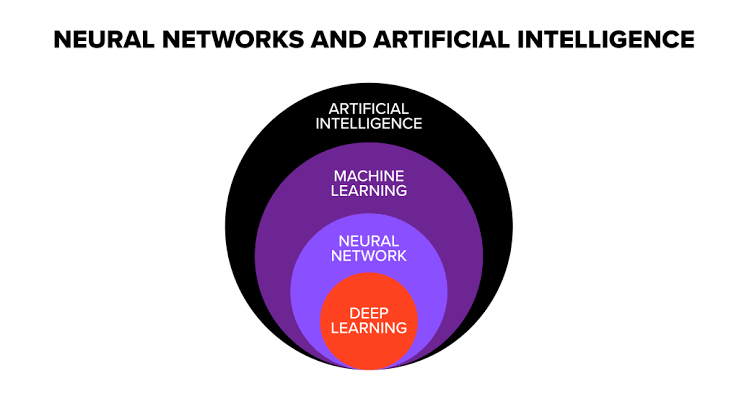
Neural Networks are a part of Artificial Intelligence. They are one of the important methods used in machine learning and deep learning to create intelligent computer systems.
Conclusion
Neural Networks have become a powerful technology that is changing the future of artificial intelligence. By learning from data and recognizing complex patterns, they help solve problems in many industries. As technology continues to grow, Neural Networks will play an even greater role in creating smarter and more efficient solutions.