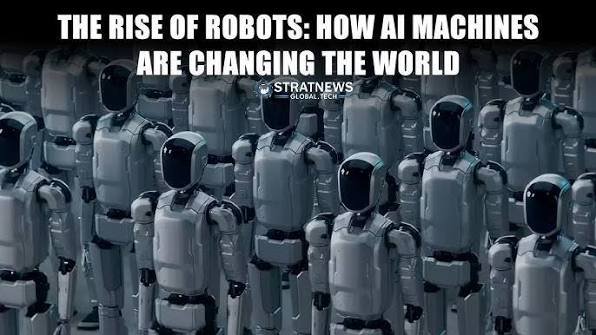
Robotics technology has become one of the most exciting areas of modern innovation. From factories and hospitals to homes, farms, and space exploration, robots are becoming part of everyday life. What once seemed like science fiction is now a practical reality, helping people perform difficult, dangerous, repetitive, and highly precise tasks.
The growth of robotics technology is closely connected with advances in artificial intelligence, machine learning, sensors, computer vision, and automation. Modern robots are not simply machines that repeat the same movement. Many can collect information from their surroundings, process data, make decisions, and respond to changing conditions.
As technology continues to improve, robotics is expected to influence almost every major industry. Understanding how this technology works, where it is being used, and what its future may look like can help us appreciate the important role robots are likely to play in society.
What Is Robotics Technology?
Robotics technology refers to the combination of engineering, computer science, electronics, artificial intelligence, and mechanical systems used to design, build, program, and operate robots.
A robot is a machine designed to perform tasks automatically or with limited human control. Depending on its design, a robot may move objects, inspect products, assist patients, explore dangerous environments, clean buildings, or perform highly precise industrial operations.
Robotics technology usually involves several important components. These include mechanical parts, sensors, motors, computer processors, software, and control systems. Together, these components allow a robot to interact with the physical world.
Some robots are designed for a single purpose, while others are capable of performing multiple tasks. The level of intelligence and independence depends on the robot’s programming, sensors, and software.
How Does Robotics Technology Work?
Robots work through a combination of hardware and software. Their hardware gives them the physical ability to move and interact with objects, while software tells them what to do.
Sensors are especially important. They allow robots to collect information about their environment. For example, cameras can help a robot identify objects, while distance sensors can help it detect obstacles. Other sensors can measure temperature, pressure, movement, or force.
The information collected by sensors is processed by a computer or control system. The robot then follows programmed instructions or uses artificial intelligence to determine an appropriate response.
Motors and mechanical components allow the robot to carry out that response. For example, an industrial robotic arm may identify a product on a production line and use its motors to pick it up and place it in another location.
This continuous process of sensing, processing, and acting allows modern robots to perform increasingly complex tasks.
Types of Robotics Technology
There are many different types of robots, each designed for specific purposes.
Industrial Robots
Industrial robots are widely used in manufacturing. They can perform tasks such as welding, painting, assembling products, packaging, and moving heavy materials.
Factories use these robots because they can work for long periods with consistent speed and accuracy. They can also perform dangerous tasks that might expose workers to heat, chemicals, heavy machinery, or other hazards.
Service Robots
Service robots are designed to assist people outside traditional manufacturing environments. They can be found in hotels, restaurants, offices, hospitals, airports, and homes.
Examples include robotic vacuum cleaners, delivery robots, customer-service robots, and machines that help transport items inside buildings.
Medical Robots
Healthcare is another important area for robotics technology. Medical robots can assist doctors and healthcare professionals with certain procedures, rehabilitation, transportation, and patient support.
Some surgical robotic systems provide doctors with highly precise control and magnified views during procedures. Other robots are designed to help patients recover movement or assist healthcare workers with routine tasks.
Robotics does not necessarily replace medical professionals. Instead, it can provide tools that help professionals perform their jobs more accurately and efficiently.
Agricultural Robots
Agriculture is increasingly using robotics to address labor challenges and improve productivity. Agricultural robots can help with planting, harvesting, monitoring crops, removing weeds, and collecting information about soil and plants.
With cameras and sensors, robots can identify areas that require attention. This can help farmers use water, fertilizers, and other resources more efficiently.
Autonomous Robots
Autonomous robots can perform tasks with limited direct human control. They use sensors, software, navigation systems, and sometimes artificial intelligence to understand their surroundings and make decisions.
Autonomous technology is being explored for delivery systems, warehouses, transportation, inspection, and exploration.
Applications of Robotics Technology
The applications of robotics technology continue to expand. Manufacturing remains one of the largest areas, but robots are now being developed for many other purposes.
In logistics and warehouses, robots can transport products, organize inventory, and assist workers with order fulfillment. This can make large distribution centers faster and more efficient.
In healthcare, robots can support medical professionals and assist patients. In agriculture, they can monitor crops and automate repetitive farm operations.
Robots are also useful in environments that are dangerous for humans. For example, robots can be used to inspect damaged buildings, work around hazardous materials, explore underwater environments, and investigate areas affected by disasters.
Space exploration is another fascinating application. Robots can travel across distant planets and collect information in environments where human missions would be difficult or extremely expensive.
Even education is benefiting from robotics. Students can use programmable robots to learn programming, engineering, mathematics, problem-solving, and logical thinking.
Robotics Technology and Artificial Intelligence
Artificial intelligence has played an important role in the development of modern robotics. Traditional robots generally followed fixed instructions. If their environment changed, they often needed to be reprogrammed.
AI can make robots more flexible. Machine learning, computer vision, speech recognition, and other AI technologies can help robots understand information and respond to different situations.
For example, a robot equipped with computer vision may recognize objects instead of simply moving to a predetermined location. An AI-powered service robot may also understand spoken instructions and respond accordingly.
However, it is important to understand that not every robot uses artificial intelligence. Many robots still perform simple, predefined tasks. The combination of robotics and AI is powerful, but the two technologies are not identical.
Benefits of Robotics Technolog
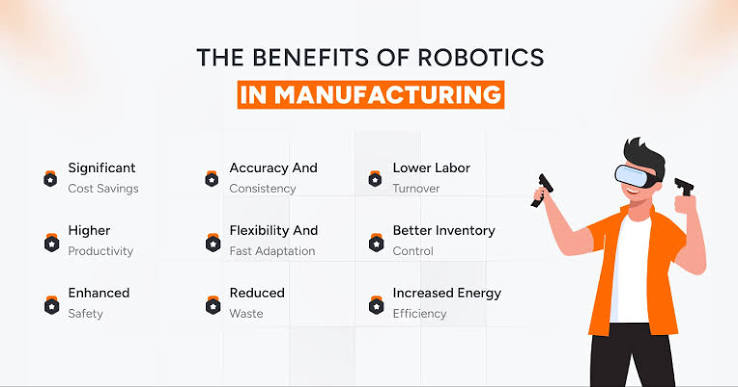
Robotics offers several important benefits to businesses and society.
One major advantage is improved productivity. Robots can perform repetitive operations quickly and consistently, allowing organizations to produce more goods or complete tasks faster.
Accuracy is another benefit. Robots can be programmed to perform precise movements repeatedly, which can reduce certain types of human error.
Safety is also important. Robots can perform tasks in dangerous environments, reducing the need to expose people to unnecessary risks.
Robots can also help businesses manage labor shortages and handle tasks that are physically demanding. In some situations, they allow human employees to focus on more creative, analytical, and decision-making activities.
For consumers, robotics can provide convenience through products such as automated cleaning devices, smart home systems, and robotic assistance technologies.
Challenges of Robotics Technology
Despite its benefits, robotics technology also presents challenges.
The initial cost of designing, purchasing, installing, and maintaining robotic systems can be high. Smaller businesses may find it difficult to invest in advanced automation.
Another concern is employment. As robots become capable of performing more tasks, some traditional jobs may change or disappear. At the same time, new jobs can emerge in robotics engineering, software development, maintenance, data analysis, and system management.
Safety is another important issue. Robots operating around people must be carefully designed and tested. A malfunctioning machine can potentially cause injuries or damage.
There are also ethical questions surrounding autonomous machines and artificial intelligence. Developers and organizations need to consider privacy, accountability, security, and responsible use.
The Future of Robotics Technology
The future of robotics technology is likely to be shaped by improvements in artificial intelligence, sensors, batteries, computing power, and materials.
Future robots may become more adaptable and capable of working alongside humans. Instead of operating separately behind safety barriers, collaborative robots may increasingly share workspaces with human employees.
Robots may also become more common in homes. Household machines could assist with cleaning, monitoring, transportation of objects, and other routine activities.
Healthcare robotics may continue to develop as well. Robots could provide more support for elderly people, patients recovering from injuries, and individuals who need assistance with daily activities.
Another promising area is soft robotics. Unlike traditional machines made from rigid materials, soft robots can use flexible materials that allow them to interact more safely with humans and delicate objects.
Humanoid robots are also attracting significant attention. Their human-like shape could allow them to operate in environments designed for people, although creating reliable and affordable humanoid robots remains a major engineering challenge.
Is Robotics Technology Good for Society?
Robotics technology itself is neither completely good nor bad. Its impact depends largely on how it is designed, deployed, and managed.
When used responsibly, robots can improve workplace safety, support healthcare, increase productivity, assist people with disabilities, and help humans explore environments that are difficult to reach.
At the same time, society must prepare for changes caused by automation. Education and training can help workers develop skills that complement robotic systems rather than compete directly with them.
Businesses and governments also have a role in establishing appropriate safety standards and responsible practices. The goal should not simply be to create more advanced robots, but to use robotics in ways that provide meaningful benefits.
Frequently Asked Questions About Robotics Technology
1. What is Robotics Technology?
Robotics Technology is a field that combines engineering, computer science, electronics, and artificial intelligence to design and operate robots. These machines can perform tasks automatically or with limited human control.
2. How does Robotics Technology work?
Robots use sensors, software, processors, motors, and control systems to understand their environment and perform specific tasks. Advanced robots may also use artificial intelligence to make decisions.
3. Where is Robotics Technology used?
Robotics Technology is used in manufacturing, healthcare, agriculture, logistics, education, space exploration, construction, and many other industries.
4. What are the main types of robots?
Common types include industrial robots, service robots, medical robots, agricultural robots, autonomous robots, collaborative robots, and humanoid robots.
5. What are the benefits of Robotics Technology?
Robotics can improve productivity, accuracy, efficiency, and workplace safety. Robots can also perform repetitive or dangerous tasks that may be difficult for humans.
6. How is AI connected to Robotics Technology?
Artificial intelligence can help robots understand their surroundings, recognize objects, process information, and make decisions. However, not every robot uses artificial intelligence.
7. Can robots replace human workers?
Robots can automate certain tasks, but they can also create new opportunities in areas such as robotics engineering, programming, maintenance, and system management. Human skills such as creativity and complex decision-making remain important.
8. What are the disadvantages of Robotics Technology?
Some challenges include high installation costs, maintenance requirements, safety concerns, job displacement, cybersecurity risks, and the need for specialized technical skills.
9. What is the future of Robotics Technology?
The future may include more advanced autonomous robots, collaborative robots, household robots, medical robots, agricultural machines, and humanoid systems that can work more naturally alongside humans.
10. Why is Robotics Technology important?

Robotics Technology is important because it can help people perform tasks more safely and efficiently. It also supports innovation in industries such as healthcare, manufacturing, transportation, agriculture, and space exploration.
Conclusion
Robotics technology is transforming the way people work, manufacture products, provide healthcare, grow food, explore the world, and interact with machines. From simple automated systems to intelligent robots capable of understanding their surroundings, the field has developed rapidly.
The combination of robotics with artificial intelligence is making machines increasingly capable and adaptable. Although challenges such as cost, employment changes, safety, and ethical concerns remain, the potential benefits are significant.
As research and innovation continue, robots are likely to become an even more visible part of modern life. The future of robotics technology will not simply be about machines replacing human workers. It will also be about humans and machines working together to solve problems, improve efficiency, increase safety, and create new possibilities.
For individuals, businesses, educators, and technology enthusiasts, learning about robotics today can provide valuable insight into the technologies that may shape tomorrow’s world.