Introduction to Data Science
Data has become one of the most valuable resources in the modern digital world. Every day, billions of people create massive amounts of data through websites, mobile applications, social media platforms, online transactions, sensors, and smart devices. However, raw data alone has limited value unless it can be collected, organized, analyzed, and transformed into meaningful information.
This is where Data Science plays an important role.
Data Science is an interdisciplinary field that combines statistics, programming, mathematics, artificial intelligence, machine learning, and domain knowledge to discover valuable insights from data. It helps organizations make smarter decisions, predict future trends, improve customer experiences, and solve complex problems.
Today, companies across industries such as healthcare, finance, education, retail, technology, and manufacturing use Data Science to gain a competitive advantage. From personalized recommendations on streaming platforms to fraud detection in banking systems, Data Science is influencing many aspects of everyday life.
What Is Data Science?
Data Science is the process of extracting useful knowledge and patterns from structured and unstructured data. It involves collecting data from different sources, cleaning and preparing it, analyzing information, building predictive models, and communicating results through visualization.
A Data Scientist uses various tools and techniques to answer important questions:
- What happened in the past?
- Why did it happen?
- What is likely to happen in the future?
- What actions should be taken based on data insights?
The main goal of Data Science is not only to analyze information but also to use that information for better decision-making.
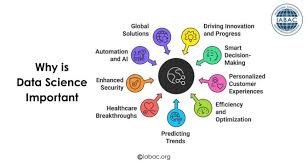
Why Is Data Science Important?
In the past, businesses relied heavily on experience and assumptions when making decisions. Today, organizations use data-driven strategies to reduce uncertainty and improve performance.
Some major reasons why Data Science is important include:
1. Better Decision Making
Data Science allows companies to analyze large amounts of information and identify trends. Instead of making decisions based only on opinions, businesses can use accurate data insights.
2. Predicting Future Trends
Machine learning algorithms can analyze historical data and predict future outcomes. Businesses use predictive analytics to forecast sales, customer behavior, market changes, and potential risks.
3. Improving Customer Experience
Many companies use Data Science to understand customer preferences. Recommendation systems, personalized advertisements, and customer support automation are examples of how data improves user experiences.
4. Solving Complex Problems
Data Science helps solve difficult problems in areas such as medical research, climate studies, cybersecurity, and transportation.
The Main Components of Data Science
Data Science is built on several important components that work together.
Mathematics and Statistics
Statistics is the foundation of Data Science. It helps professionals understand patterns, relationships, and trends within datasets. Concepts such as probability, regression analysis, and statistical testing are commonly used.
Programming
Programming skills are essential for handling and analyzing data. Languages such as Python, R, and SQL are widely used by Data Scientists.
Python is especially popular because it provides powerful libraries for data analysis, machine learning, and visualization.
Machine Learning
Machine Learning allows computers to learn from data and make predictions without being directly programmed for every task.
Common machine learning applications include:
- Spam email detection
- Product recommendations
- Image recognition
- Fraud detection
- Forecasting systems
Data Visualization
Data visualization converts complex information into understandable charts, graphs, and dashboards. It helps decision-makers quickly understand important insights.
The Data Science Process
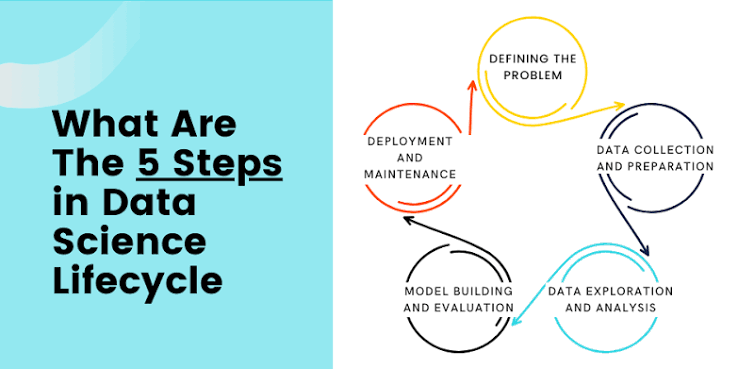
A typical Data Science project follows several steps.
Data Collection
The first step is gathering relevant data from different sources, including databases, websites, applications, surveys, and sensors.
Data Cleaning
Raw data often contains errors, missing values, or duplicate information. Data cleaning improves accuracy and prepares the data for analysis.
Data Exploration
Data Scientists examine datasets to discover patterns, relationships, and important trends.
Model Building
Machine learning models are created using prepared data. These models help predict outcomes and provide solutions.
Model Evaluation
The performance of a model is tested to ensure that predictions are accurate and reliable.
Deployment
After testing, the model can be implemented in real-world applications where it provides continuous value.
Frequently Asked Questions (FAQs) About Data Science
1. What is Data Science?
Data Science is a field that focuses on collecting, analyzing, and interpreting large amounts of data to find useful insights. It combines statistics, programming, machine learning, artificial intelligence, and data analysis techniques to solve real-world problems.
2. Why is Data Science important?
Data Science is important because it helps businesses and organizations make better decisions using accurate information. It helps in predicting trends, understanding customers, improving products, reducing risks, and increasing efficiency.
3. What skills are required to become a Data Scientist?
To become a Data Scientist, you need skills such as programming, statistics, mathematics, machine learning, data visualization, problem-solving, and knowledge of tools like Python, SQL, and data analysis platforms.
4. Which programming languages are used in Data Science?
The most commonly used programming languages in Data Science are Python, R, and SQL. Python is widely preferred because of its simple syntax and powerful libraries for data analysis and machine learning.
5. Is Data Science a good career option?
Yes, Data Science is considered one of the fastest-growing career fields. Companies across industries need professionals who can analyze data and create data-driven solutions. It offers opportunities in technology, healthcare, finance, marketing, and many other sectors.
6. What is the difference between Data Science and Data Analytics?
Data Analytics mainly focuses on examining existing data to understand past performance, while Data Science uses advanced techniques such as machine learning and artificial intelligence to analyze data and predict future outcomes.
7. How long does it take to learn Data Science?
The time required to learn Data Science depends on your background and learning approach. Beginners may need several months to build basic skills, while becoming an advanced Data Scientist requires continuous practice and experience.
8. Can beginners learn Data Science?
Yes, beginners can learn Data Science with the right learning path. Starting with basic mathematics, programming, statistics, and data analysis concepts can help build a strong foundation.
9. What tools are used in Data Science?
Popular Data Science tools include Python, R, SQL, Jupyter Notebook, TensorFlow, Tableau, Power BI, and various cloud-based data platforms.
10. What is the future of Data Science?
The future of Data Science is very promising because organizations are generating more data than ever before. With the growth of artificial intelligence, automation, and machine learning, the demand for Data Science experts will continue to increase.
Conclusion
Data Science has become one of the most important technologies in the modern digital era. It helps organizations transform raw data into meaningful insights that support better decisions and innovative solutions.
From improving healthcare systems and financial services to enhancing customer experiences and developing intelligent technologies, Data Science is changing the way the world operates. The combination of artificial intelligence, machine learning, statistics, and programming has created new possibilities for solving complex challenges.
For students, professionals, and businesses, learning and adopting Data Science can provide significant advantages in the future. As the amount of digital data continues to grow, skilled Data Scientists will remain highly valuable across different industries.
Data Science is not just a technology trend; it is a powerful approach that allows people and organizations to understand information, predict future possibilities, and create smarter solutions for tomorrow.