Automated thinking is becoming an important concept in modern technology as organizations increasingly use artificial intelligence, machine learning, and advanced software systems to handle tasks that once required human judgment. From analyzing large datasets to identifying patterns and supporting business decisions, intelligent systems are changing the way technology professionals design, manage, and improve digital processes.
Unlike traditional automation, which generally follows predefined rules, automated thinking focuses on systems that can analyze information, recognize patterns, make predictions, and recommend possible actions. This shift is creating new opportunities across software development, cybersecurity, data analytics, cloud computing, business intelligence, and many other technology fields.
For technology professionals, understanding automated thinking is becoming increasingly valuable. It helps explain how modern intelligent systems operate and why businesses are investing heavily in technologies capable of processing information with greater speed and consistency.
What Is Automated Thinking?
Automated thinking refers to the ability of a computer system or software application to process information, evaluate different possibilities, identify patterns, and produce useful conclusions or recommendations with limited human intervention.
Traditional automation typically works according to fixed instructions. For example, a system might automatically send an email when a customer completes a form. The process is predictable because the developer has defined exactly what should happen.
Automated thinking can go further. An intelligent system may examine customer behavior, compare historical information, identify unusual patterns, and determine which type of response is most appropriate.
This does not necessarily mean that machines think exactly like humans. Instead, the term describes computational processes that perform tasks associated with human reasoning, such as classification, prediction, problem solving, and decision support.
How Automated Thinking Works
Modern automated thinking systems usually combine several technologies rather than relying on a single tool.
Artificial intelligence provides the broader framework for creating systems that can perform tasks associated with human intelligence. Machine learning allows systems to identify patterns from data and improve their performance based on experience.
Natural language processing enables computers to understand and generate human language, while data analytics helps systems discover useful information within large datasets.
A simplified automated thinking workflow can look like this:
- Data collection – The system gathers relevant information from databases, applications, sensors, documents, or other sources.
- Data processing – Raw information is cleaned, organized, and prepared for analysis.
- Pattern identification – Algorithms examine the information to discover relationships and trends.
- Evaluation – The system compares possible outcomes or classifications.
- Recommendation or action – The system produces a result, recommendation, prediction, or automated response.
- Human review – In many professional environments, people review important decisions before action is taken.
This combination of automation and analysis allows organizations to process information much faster than conventional manual workflows.
Automated Thinking vs. Traditional Automation
One of the most important distinctions is the difference between traditional automation and automated thinking.
Traditional automation generally follows an established sequence of rules. If condition A occurs, the system performs action B. These systems are highly useful for repetitive and predictable tasks.
Automated thinking is more flexible. Instead of simply following a fixed sequence, an intelligent system can analyze changing information and determine an appropriate response based on patterns or learned models.
For example, a traditional cybersecurity system might block an IP address after a specific number of failed login attempts. An intelligent security platform could analyze login location, device behavior, access time, previous activity, and other signals to identify potentially suspicious behavior.
Both approaches are valuable. Traditional automation remains efficient for predictable processes, while automated thinking is particularly useful when decisions depend on large amounts of changing information.
Why Automated Thinking Matters to Technology Professionals
Technology professionals work in environments where the amount of available data is growing rapidly. Applications generate logs, customers create behavioral data, connected devices produce sensor information, and businesses continuously create digital records.
Manually reviewing all this information is often impractical.
Automated thinking can help technology teams process information more efficiently. Developers can use intelligent systems to identify coding patterns or potential problems. Security teams can analyze suspicious activity. Data professionals can discover trends, while IT teams can use intelligent monitoring to identify possible infrastructure issues.
The technology does not eliminate the need for professionals. Instead, it can help them focus their time on complex problems that require experience, creativity, communication, and strategic judgment.
Applications of Automated Thinking
Automated thinking has applications across almost every major area of technology.
Software Development
Software development teams can use intelligent tools to analyze source code, identify potential errors, suggest improvements, and assist with documentation.
Developers can also use automated analysis to understand large and complex codebases. This can be particularly useful when maintaining legacy applications or working with unfamiliar systems.
However, developers still need to review generated suggestions carefully. Automated recommendations can contain mistakes, and software quality depends on human engineering judgment.
Cybersecurity
Cybersecurity is another important application.
Modern organizations generate enormous quantities of security information. Security teams may need to evaluate login events, network traffic, endpoint activity, application logs, and other signals.
Automated thinking systems can help identify unusual behavior and prioritize potentially serious events. Instead of treating every alert equally, intelligent security platforms can help analysts focus on incidents that appear more significant.
This can improve response times while reducing the workload associated with reviewing large numbers of security alerts.
Data Analytics
Data analytics depends heavily on the ability to identify meaningful patterns.
Automated thinking can help analyze historical information, detect relationships between variables, classify records, and generate predictions. Businesses can use these capabilities to better understand customer behavior, operational performance, and market trends.
For data professionals, the value comes from combining computational analysis with domain knowledge. Algorithms can identify patterns, but experts must determine whether those patterns make business or technical sense.
Cloud Computing
Cloud environments contain complex infrastructures with constantly changing workloads.
Intelligent monitoring systems can analyze resource usage, application performance, traffic patterns, and infrastructure events. This can help organizations identify potential performance problems before they become major incidents.
Automated systems can also support resource optimization by identifying workloads that may require additional or reduced capacity.
IT Operations
IT operations teams can use automated thinking to improve monitoring, incident detection, and troubleshooting.
For example, an intelligent monitoring platform might examine multiple system signals simultaneously and identify a relationship between a database problem and an application performance issue.
This can help teams investigate incidents more efficiently instead of reviewing thousands of unrelated alerts manually.
Benefits of Automated Thinking
The growing interest in automated thinking is driven by several potential benefits.
Faster Information Processing
Computers can process enormous amounts of information much faster than people can manually review it. This makes intelligent automation useful in environments where decisions depend on large datasets.
Improved Efficiency
Automating analysis can reduce the amount of repetitive work performed by technology teams. Professionals can spend more time on architecture, strategy, innovation, and problem solving.
Consistent Analysis
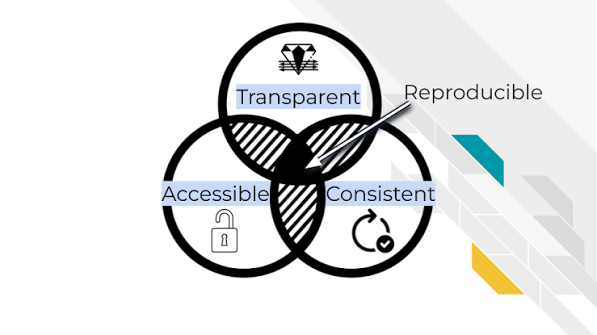
Human decisions can vary depending on workload, experience, and circumstances. Properly designed automated systems can apply the same analytical process consistently.
Better Decision Support
Automated thinking can provide professionals with additional information when making decisions. Rather than replacing expertise, it can act as a decision-support layer.
Scalability
An intelligent system can analyze growing volumes of information without requiring a proportional increase in manual effort. This can be especially valuable for large organizations.
Challenges and Limitations
Despite its advantages, automated thinking has important limitations.
The quality of an intelligent system depends heavily on the quality of the data it receives. Poor, incomplete, outdated, or biased data can produce unreliable results.
Another challenge is explainability. Some advanced models can produce useful predictions without making it obvious why a particular result was generated. This can become a serious concern when decisions affect customers, employees, security, or financial operations.
Privacy is another consideration. Organizations must carefully manage the information used by intelligent systems and follow applicable data protection requirements.
There is also a risk of over-automation. Not every decision should be delegated to software. High-impact situations often require human review, context, accountability, and professional judgment.
The Role of Human Expertise
Automated thinking should not be viewed simply as a replacement for human intelligence.
Technology professionals bring qualities that automated systems do not reliably reproduce, including organizational knowledge, ethical judgment, creativity, communication, and an understanding of complex human situations.
The strongest approach is often a combination of intelligent automation and human oversight.
For example, an automated system may identify a suspicious security event, but a cybersecurity analyst can investigate the context and decide how the organization should respond.
Similarly, an intelligent development tool may suggest a code change, but an experienced developer must determine whether the change is appropriate for the application’s architecture and requirements.
This human-in-the-loop approach can provide a balance between computational speed and professional judgment.
How Organizations Can Adopt Automated Thinking
Organizations considering intelligent automation should begin with clearly defined problems rather than adopting technology simply because it is popular.
The first step is to identify repetitive or data-intensive processes where intelligent analysis could provide measurable value.
Next, organizations should evaluate the quality and availability of their data. Without reliable information, even sophisticated systems may produce poor results.
Technology teams should also establish clear performance measurements. These might include reduced processing time, fewer false alerts, improved operational efficiency, or better decision accuracy.
Security, privacy, governance, and human oversight should be included from the beginning rather than added after deployment.
A gradual implementation strategy is often more practical than attempting to automate an entire organization at once.
The Future of Automated Thinking
The future of automated thinking will likely involve closer integration between artificial intelligence, machine learning, cloud platforms, software development tools, and enterprise applications.
As intelligent systems become more capable, they may increasingly assist with complex workflows rather than isolated tasks.
Technology professionals may work alongside intelligent systems that continuously analyze infrastructure, recommend improvements, detect risks, and assist with technical decision-making.
However, the future will not simply be about making systems more autonomous. Trust, transparency, security, reliability, and responsible deployment will become increasingly important.
Organizations that combine intelligent technologies with strong human oversight are likely to be better positioned to gain value while managing potential risks.
Frequently Asked Questions About Automated Thinking
What does automated thinking mean?
Automated thinking describes computational systems that can analyze information, recognize patterns, make predictions, and support decisions with limited human intervention.
Is automated thinking the same as artificial intelligence?
They are closely related but not identical. Artificial intelligence is a broad field involving technologies designed to perform tasks associated with human intelligence. Automated thinking describes certain capabilities within intelligent systems, particularly analysis, reasoning, prediction, and decision support.
Can automated thinking replace technology professionals?
In most professional environments, it is better understood as an augmentation tool rather than a complete replacement for experts. Human oversight remains important for complex, sensitive, and high-impact decisions.
Where is automated thinking used?
It can be used in cybersecurity, software development, IT operations, data analytics, cloud computing, business intelligence, customer support, and many other technology-related areas.
What are the biggest challenges?

Data quality, privacy, security, bias, explainability, reliability, and excessive dependence on automated recommendations are among the major challenges.
Conclusion
Automated thinking represents an important evolution in the way software systems process information and support human decision-making. Instead of relying exclusively on fixed rules, modern intelligent technologies can analyze large datasets, recognize patterns, generate predictions, and assist professionals with increasingly complex tasks.
For technology professionals, understanding this concept is valuable because intelligent automation is becoming part of many areas of modern IT. From cybersecurity and software development to cloud operations and data analytics, organizations are finding new ways to combine computational capabilities with human expertise.
The most effective approach is not necessarily to automate everything. It is to identify where intelligent systems can provide meaningful value while maintaining appropriate human oversight.
As technology continues to evolve, automated thinking is likely to become an increasingly important part of digital systems. Organizations that use it responsibly can improve efficiency, process information more effectively, and give their technology teams better tools for solving complex problems.